Guagua — Dominican Meaning, Definition and Usage
Learn what guagua means in Dominican Spanish, how Dominicans use the word every day, and why it is essential for understanding local transportation.
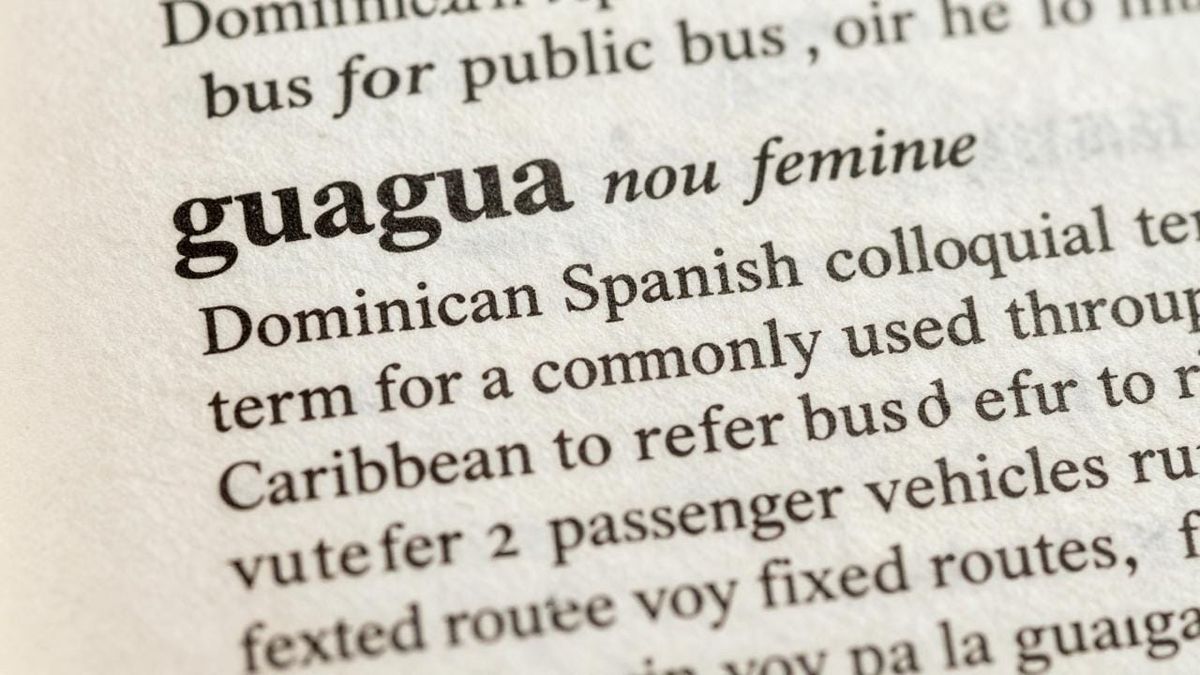
Guagua
Pronunciation:
GWAH-gwah
Part of speech:
Noun
Gender:
La
English equivalent:
Bus, public bus, minibus, coach (depending on context)
Meaning:
In Dominican Spanish, guagua is the everyday word for a bus or passenger vehicle used for public transportation. Although the term is also used in other Caribbean Spanish-speaking regions, including Cuba, Puerto Rico, and the Canary Islands, it has become one of the most recognizable and frequently used transportation words in the Dominican Republic. For most Dominicans, guagua is the natural way to refer to a bus in daily conversation.
What does "guagua" mean in Dominican Spanish?
In the Dominican Republic, guagua simply means a bus, but the type of vehicle can vary depending on the context.
It may refer to:
- a city bus
- a privately operated route bus
- an intercity bus
- a small passenger van
- a larger coach used for longer journeys
The closest English equivalent is usually "bus", but the word carries an everyday familiarity that makes it different from the more formal Spanish word autobús.

A Dominican speaker will normally say:
"Voy en guagua."
rather than:
"Voy en autobús."
Both are understandable, but guagua is the word people naturally use in ordinary conversation.
The meaning is usually clear from context. Someone talking about commuting in Santo Domingo may mean an urban route bus, while someone traveling between cities may mean an intercity coach.
How Dominicans use "guagua"
Guagua is one of the most common transportation words in Dominican Spanish and is used by people of all ages and social backgrounds.
You will hear it in:
- homes
- workplaces
- schools and universities
- neighborhoods
- markets
- public transportation stations
- everyday conversations
The word is neutral and does not carry slang or negative meaning.
For Spanish learners, understanding guagua is extremely useful because transportation is one of the first topics visitors encounter when traveling around the Dominican Republic.
Common expressions include:
- coger la guagua — to take the bus
- esperar la guagua — to wait for the bus
- perder la guagua — to miss the bus
- la guagua viene llena — the bus is coming full
The verb coger deserves attention for visitors because although it commonly means "to take" in Dominican Spanish, it has different meanings in some other Spanish-speaking countries.
Examples of "guagua" in Dominican Spanish
"Voy a coger la guagua para ir al trabajo."
English:
"I'm going to take the bus to go to work."
"¿Dónde pasa la guagua para Santiago?"
English:
"Where does the bus to Santiago pass?"
"La guagua viene llena, mejor esperamos la próxima."
English:
"The bus is coming full, we should wait for the next one."
"Se me fue la guagua esta mañana."
English:
"I missed the bus this morning."
Cultural background
The word guagua is deeply connected to everyday Dominican life.
For generations, public transportation has been essential for millions of Dominicans traveling to work, studying, shopping, visiting family, and moving between towns and cities.
Unlike some countries where public buses operate through a single centralized system, Dominican transportation has historically included many privately operated routes. These vehicles are often a familiar part of local communities, with drivers and routes becoming well known among regular passengers.
In cities such as Santo Domingo and Santiago, guaguas operate alongside newer transportation systems, including modern urban transit options. However, the word remains firmly rooted in daily Dominican vocabulary.
For visitors, learning guagua provides an immediate connection to everyday Dominican conversations. Questions such as:
"¿Dónde pasa la guagua?"
or:
"¿Esa guagua va para Moca?"
are among the most practical phrases a traveler can understand.
Regional variations
The word guagua is widely understood throughout the Dominican Republic.
There are differences mainly in the type of vehicle being described rather than the word itself.
In some areas, a guagua may refer more commonly to smaller privately operated vehicles, while in other areas it may refer to larger buses used for longer-distance travel.
The frequency of use may vary by age and location, but the word remains universally recognizable.
Is "guagua" used outside the Dominican Republic?
Yes.
Guagua is used in several Spanish-speaking regions, especially:
- Cuba
- Puerto Rico
- Canary Islands
It is also found in some other Caribbean and Latin American contexts.
However, the exact meaning and cultural associations vary by country.
In Chile, for example, guagua commonly means baby rather than bus. In parts of South America, the word has completely different meanings because of Indigenous language influences.
The Dominican use of guagua belongs to the Caribbean Spanish tradition, where it specifically refers to transportation.
Quick summary
| Topic | Details |
|---|---|
| Meaning | Bus or public passenger vehicle |
| English equivalent | Bus, minibus, coach |
| Used by | Dominicans of all ages |
| Register | Neutral, everyday speech |
| Category | Transportation / Dominican Spanish |